KODAK DC240 ZOOM Digital Camera
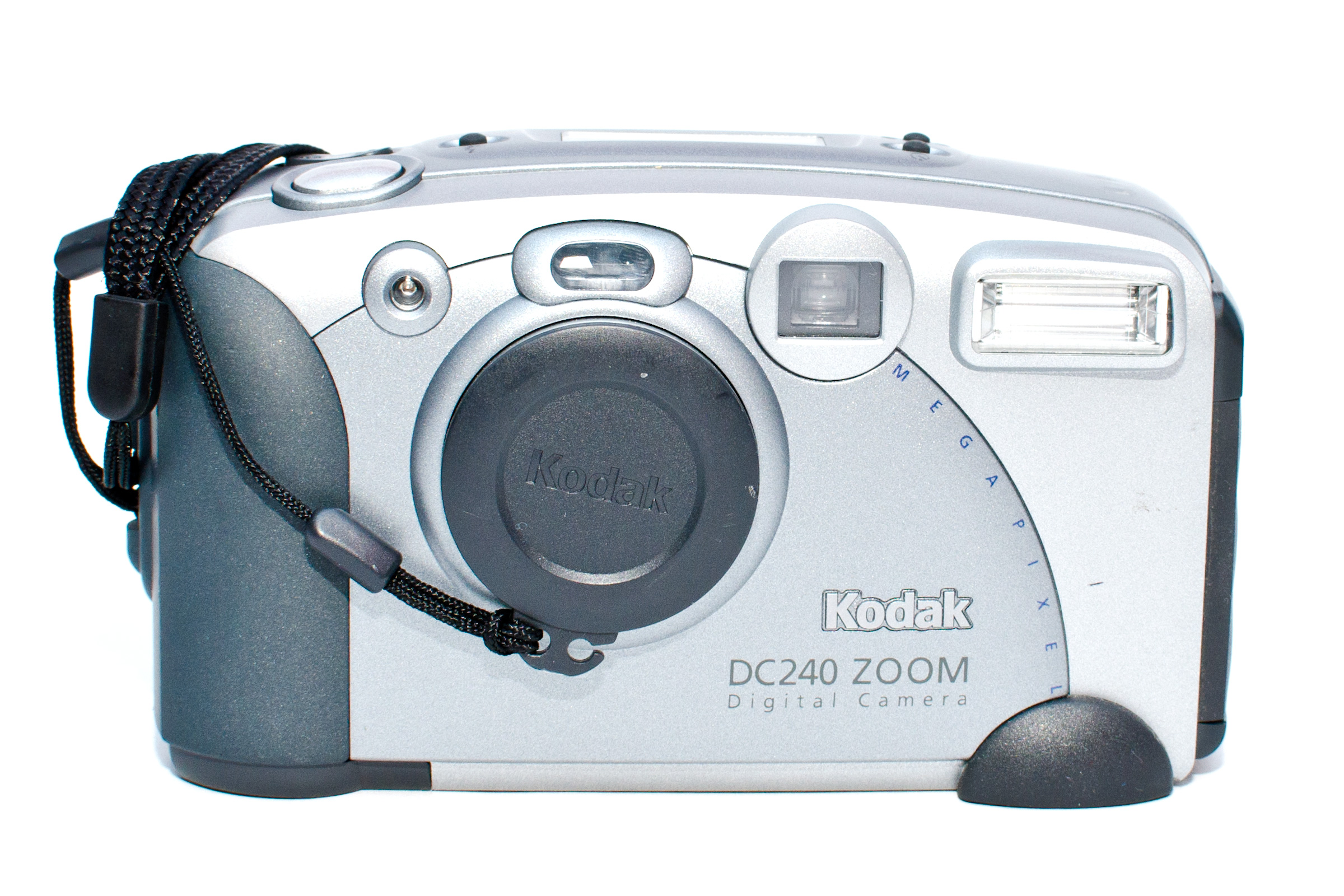
The Kodak DC240 Zoom, announced on February 26, 1999, was a mid-range entry in Kodak’s DC series of early consumer digital cameras. It used a 1/3-inch, 1.3-megapixel CCD sensor and produced images at resolutions up to 1280×960 pixels, or about 1.23 megapixels of recorded image data. The camera paired this with a 3× optical zoom lens covering the equivalent of 39–117mm on a 35mm camera, supplemented by 2× digital zoom. This made it a more versatile option than the fixed-lens DC200 and DC200 Plus, while the related DC210 models had already introduced a shorter 2× optical zoom.
Images were stored on removable CompactFlash cards rather than fixed internal memory, letting users expand storage capacity by swapping cards. Photographs could be composed and reviewed using a 1.8-inch rear LCD screen, while an optical real-image viewfinder provided a more conventional shooting option. Power came from four AA batteries, a common arrangement for consumer digital cameras of the period.
At launch, Kodak positioned the DC240 between its lower-cost DC200/DC210 Plus models and the more advanced DC260, presenting it as an affordable step up for both business users and general consumers interested in digital photography. The higher-resolution DC280 joined Kodak’s range later in 1999, after the DC240’s initial introduction. The camera arrived during a period when Kodak was investing heavily in consumer digital imaging and trying to make digital cameras more practical and accessible to mainstream buyers.
A more distinctive version, the DC240i, followed later in 1999. Technically based on the standard DC240, it featured translucent housings inspired by the colorful design language of Apple’s contemporary iMac G3. Kodak offered it in five colors—Blueberry, Strawberry, Lime, Grape, and Tangerine—with contemporary reports stating that 1,000 examples of each color were produced, for a total run of 5,000 cameras. Today, the ordinary DC240 is primarily of interest as an example of late-1990s consumer digital-camera technology, while the rarer, brightly colored DC240i variants have attracted additional attention from collectors of vintage cameras and turn-of-the-millennium technology.