KODAK COLORBURST 250 Instant Camera
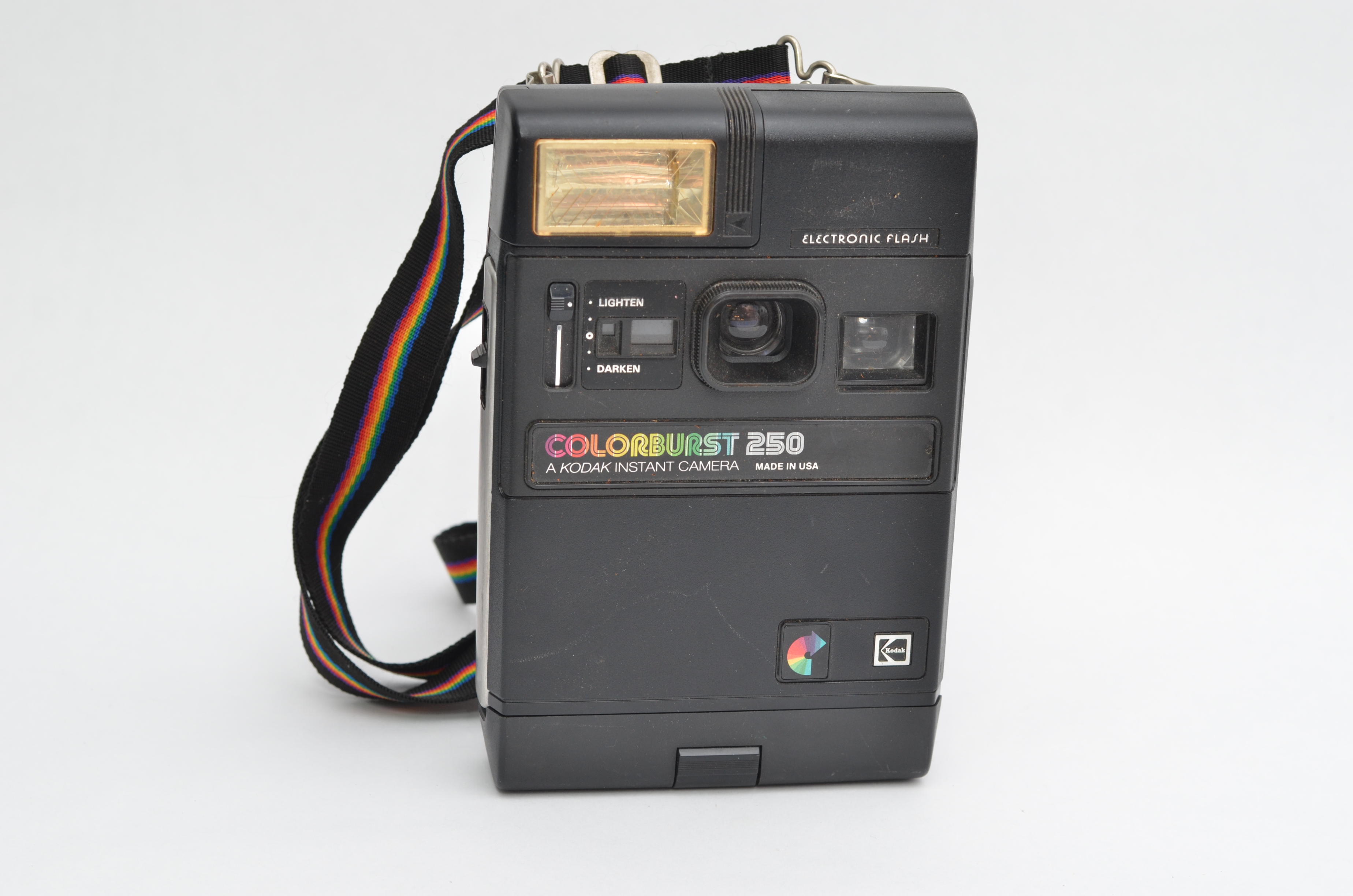
Introduced in July 1979 alongside the simpler Colorburst 50, the Colorburst 250 (factory designation EK160-EF) was the first camera in Kodak's integral instant-film line to include a built-in electronic flash rather than disposable flashbulbs, combined with motorized ejection of the developing print; Kodak marketed it at the time as the only instant camera on the market with a built-in flash. It carried a fixed-focus 100mm f/12.8 lens, a shutter ranging from 2 seconds to 1/300 second, and ran on four AA batteries, reflecting Kodak's back-of-pack film exposure design — an alternative to the mirror-based optics Polaroid used in its cameras. Like the rest of Kodak's instant line, it used PR10 (PR144) film, a format Kodak stopped producing after a long-running patent dispute with Polaroid ended in a January 1986 injunction barring Kodak from making instant cameras or film; under the resulting settlement, owners were asked to mail in their camera's front nameplate for a rebate, which is why many surviving Colorburst cameras, including some 250s, are missing their Kodak branding today. Since compatible film hasn't been manufactured since the late 1980s, the Colorburst 250 is now collected mainly as a display piece rather than an active shooter, notable among collectors as an early flash-equipped instant camera with Kodak's distinctive rainbow-striped carry strap.